
[2026 Latest] Comparing Kyoto's Taxi Booking Apps! Tips for Getting a Ride Every Time, Plus Charter and All-Day Unlimited-Ride Options for Sightseeing
![[2026 Latest] Comparing Kyoto's Taxi Booking Apps! Tips for Getting a Ride Every Time, Plus Charter and All-Day Unlimited-Ride Options for Sightseeing](/_astro/4220347_s.NHnSLy9T_Z1b7a0b.webp)
17 min read
- The Latest on Kyoto Taxi Booking and Ride-Hailing Apps in 2026
- The Option That Lets You Enjoy Kyoto Sightseeing to the Fullest: “Charter” and “All-Day Unlimited Rides”
- The Solution That Eliminates the Stress of “The App Won’t Connect” or “I Can’t Book”
- Making Kyoto Travel More Affordable and Convenient with Advance Booking: How to Use “NearMe”
- Conclusion: In Kyoto, the Right Answer Is to Use Both “Instant Apps” and “Reservation-Based NearMe”
Ever struggled to catch a taxi or get an app to connect while sightseeing in Kyoto?
This article compares the features of major ride-hailing apps like GO, DiDi, and MK Taxi, and explains how to get around by taxi even during peak tourist seasons.
From typical rates for charter and all-day unlimited-ride plans to how to use NearMe’s ride-sharing service to cut costs, we’ve rounded up the options that make getting around Kyoto more comfortable.
The Latest on Kyoto Taxi Booking and Ride-Hailing Apps in 2026
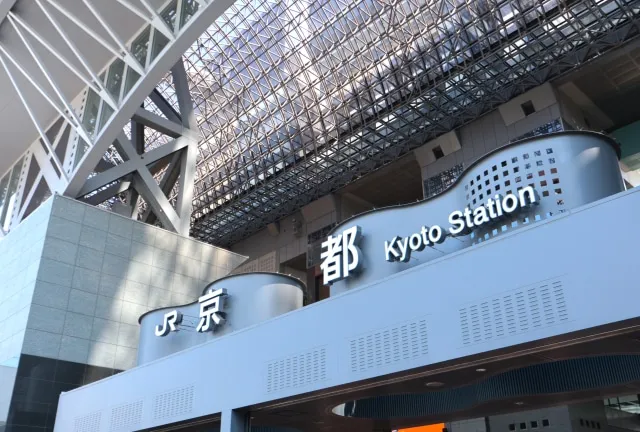
Is “You Can’t Catch One When It’s Crowded” the New Normal? The Transportation Barrier in Kyoto Sightseeing
Kyoto is one of Japan’s leading tourist destinations, drawing large numbers of visitors from both Japan and abroad throughout the year.
Beyond the spring cherry blossom season and the autumn foliage season, crowds surge all at once toward major spots like Kiyomizu-dera, Arashiyama, and Kinkaku-ji during Golden Week and the New Year holidays.
As a result, a serious mobility barrier has emerged: you simply can’t flag down a “cruising” taxi on the street anymore.
According to a survey by M2 Research Institute (MM Soken), many respondents cited “I could no longer catch a taxi by hailing one on the road” as their reason for switching to ride-hailing apps, with more and more users forced to migrate out of necessity.
The same trend is strong in Kyoto as well, and relying on cruising taxis near tourist spots is already becoming unrealistic.
Kyoto is one of Japan’s most iconic tourist destinations, drawing not only overseas visitors but also many Japanese travelers, which has made congestion on public transportation a serious issue. Even travelers who try to avoid crowded buses and subways by taking a taxi often find that taxis themselves are in short supply near popular spots during peak season.
Against this backdrop, having a smartphone ride-hailing app ready in advance has become a source of peace of mind for getting around Kyoto.
Strengths and Weaknesses of the Major Taxi Apps You Can Call Right Now in Kyoto (GO, DiDi, MK)
As of 2026, the three major ride-hailing apps that actually work in Kyoto city are “GO,” “DiDi,” and “MK Smartphone Dispatch.”
Each has clear characteristics, and it’s wise to use them differently depending on the situation and purpose.
・Taxi App GO Among the taxi apps available in Kyoto, GO covers the widest service area and stands out for its excellent usability, giving it a very large user base.
In fact, according to the M2 Research Institute survey, GO ranks first in taxi app usage in all five prefectures surveyed, including Kyoto.
Its service area covers a wide range of Kyoto Prefecture, including Kyoto City as well as Uji, Joyo, Nagaokakyo, Yawata, Kyotanabe, and Kizugawa, making it an easy app to use even for first-time visitors to Kyoto. Payment methods include credit card, cash, and d Payment.
・DiDi This app’s defining feature is that “a taxi arrives in an average of 5 minutes (*1),” and it operates under the concept of “a taxi app you can use without paying a fee.” It’s available in all 12 cities and towns within Kyoto.
It also supports PayPay payments, making it convenient for users who prefer to go cashless.
*1 Time from dispatch confirmation to pickup by an affiliated vehicle at the specified location (nationwide average, January–July 2025). Pickup may take longer than 5 minutes, or dispatch may not be possible, in some cases.
・MK Taxi Its biggest appeal is the wide range of vehicle types you can request, from luxury cars like Lexus and Mercedes-Benz to large vehicles like the Alphard and Vellfire. As a long-established taxi company based in Kyoto, it maintains thorough quality control and is known for its high standard of driver service.
Payment methods include cash, credit card (VISA, MasterCard, etc.), QR code payment, and the TACPO card.
The table below summarizes the key features of each app.
| App | Service Area (within Kyoto Prefecture) | App Fee | Main Payment Methods | Main Strengths | Points to Note |
|---|---|---|---|---|---|
| GO | Wide area including Kyoto City, Uji, Nagaokakyo, Yawata, Kyotanabe | ¥100 | Cash, credit card, d Payment, etc. | No. 1 in users, widest service area, plenty of coupons | Dispatch waits may occur during peak season |
| DiDi | All 12 cities/towns including Kyoto City, Uji, Muko, Nagaokakyo | Free | Cash, credit card, PayPay | Zero app fee, free advance booking, average 5-minute dispatch | Service area is slightly narrower than GO |
| MK Smartphone Dispatch | Kyoto City, Uji, Joyo, and others | Free | Cash, credit card (VISA, MasterCard, etc.), QR code payment, TACPO | Can request luxury and large vehicles, high service quality | May be unable to arrange a car during morning/evening peak hours or bad weather |
If you can’t get a taxi through one app, it’s a good idea to try another.
Depending on the time of day, traffic conditions, and weather, there will be times a taxi can’t come, but another app may have an available taxi nearby. For that reason, installing both GO and DiDi at minimum is a practical measure to reduce your transportation risk while sightseeing in Kyoto.
That said, keep in mind that ride-hailing apps are fundamentally designed for immediate, “call one right now” dispatch.
When taxi requests are concentrated, arrangements may not be possible in some cases; in particular, during morning and evening peak hours and in bad weather, requests pile up, and there are indeed cases where a car can’t be arranged.
If you want to reliably visit multiple spots during peak tourist season, it’s important not to rely solely on instant-dispatch apps, and instead combine them with transportation options that allow advance booking.
We’ll explain this in detail in the next section.
The Option That Lets You Enjoy Kyoto Sightseeing to the Fullest: “Charter” and “All-Day Unlimited Rides”
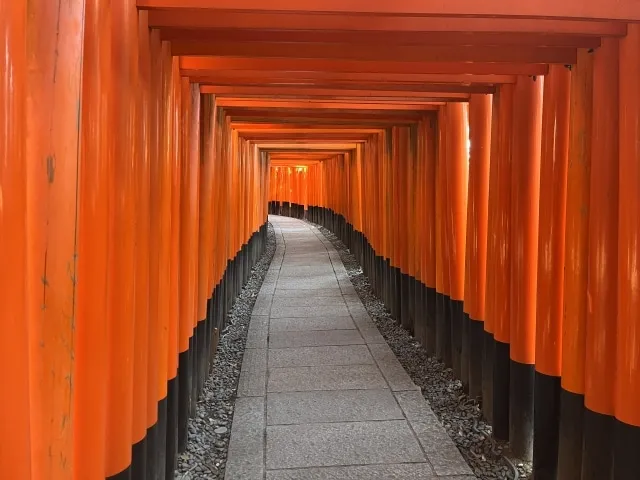
Kyoto’s tourist attractions, including its World Heritage sites, are scattered across the city, and trying to visit all the major spots — Kiyomizu-dera, Kinkaku-ji, Fushimi Inari Taisha, Arashiyama, and Nijo Castle — using public transportation alone means piling up transfer hassles and wait times.
A now-standard travel style among visitors to Kyoto is “chartering a sightseeing taxi” or using an “all-day unlimited-ride plan.”
You can visit multiple spots at your own pace without worrying about your luggage, letting you make the most of your limited travel time.
From Kiyomizu-dera to Kinkaku-ji: Why Taxi Charters Are Chosen for Visiting Multiple Spots
The biggest reason taxi charters are chosen for sightseeing in Kyoto is that you can go directly from one destination to the next with zero transfers, efficiently touring multiple spots.
Using city buses or the subway, even a trip from Kiyomizu-dera to Kinkaku-ji requires transferring between multiple lines, and when combined with peak-season crowding, the transit alone can easily take over an hour.
A sightseeing taxi lets you freely visit only the places you want to go on a free-plan basis — you can be picked up at your accommodation, tour various popular spots, and then be dropped off at a station or airport, letting the taxi handle your entire trip from start to finish.
The more famous a spot is, the more likely you are to find there’s no parking or that the lot is full, but with a sightseeing taxi you don’t need to worry about parking at all — it can pull over briefly near the attraction, which also greatly reduces the strain on your legs and back.
Enjoying a guided tour from a professional driver is another appeal, as some services offer trivia and hidden-gem tips about each spot you visit.
Being able to set a highly flexible route tailored to your personal itinerary — such as collecting shrine stamps (goshuin) or visiting popular spots first thing in the morning — is also a benefit unique to chartering.
Additionally, any shopping bags you pick up along the way can be stored in the car, so you can focus on sightseeing without worrying about your belongings. There’s no need to lug a suitcase around or use a coin locker at Kyoto Station, so you can fully enjoy sightseeing from the very first day of your trip.
Typical Rates and Booking Difficulty for Standard One-Day Taxi Charter/Flat-Rate Plans
When considering a charter taxi, the rate is naturally a concern. It may seem expensive at first glance, but the cost per person drops significantly when used by a group or family.
As a rough guide, a one-day charter (about 7–8 hours) for a standard 4-seat car typically runs from ¥35,000 to ¥50,000.
Since this is the rate per vehicle, for example, when used by 4 people, the cost works out to roughly ¥8,000 per person for a full day of comfortable sightseeing.
The table below summarizes typical rate ranges for a sightseeing taxi charter by duration.
| Duration | Approx. Rate (per vehicle) | Per Person (group of 4) | Typical Use |
|---|---|---|---|
| 2–3 hours (half day) | Approx. ¥12,000–21,000 | Approx. ¥3,000–5,300 | Limited area, e.g. Gion, around Kiyomizu-dera |
| 6 hours | Approx. ¥25,000–33,000 | Approx. ¥6,300–8,300 | Visiting several major spots in the city |
| 8 hours (full day) | Approx. ¥35,000–50,000 | Approx. ¥8,800–12,000 | Full tour including Arashiyama, Kinkaku-ji, Kiyomizu-dera |
*The above are estimates only. Admission fees, parking fees, and highway tolls are generally charged separately as actual costs. Rates also vary by vehicle type (sedan, Alphard, jumbo taxi).
An all-day unlimited-ride sightseeing taxi costs tens of thousands of yen per day to charter a full vehicle, but because the rate is set per vehicle, the more people riding together, the lower the transportation cost per person. On the other hand, charter taxi bookings often fill up weeks to months in advance during peak tourist season, making it difficult to arrange one at the last minute.
Jumbo taxis in particular are limited in number, so booking as early as possible is essential.
Since services and pricing structures vary by company, it’s important to compare options based on your purpose, group size, and schedule.
Traditional sightseeing taxi charter plans are mainly booked by phone or a dedicated form, and same-day or next-day bookings are often not possible, so it’s important to plan several months ahead, especially during peak season.
Booking your transportation at the same time as your accommodations and other travel arrangements, during the planning stage of your trip, is the golden rule for making sure you can enjoy Kyoto sightseeing with confidence.
The Solution That Eliminates the Stress of “The App Won’t Connect” or “I Can’t Book”
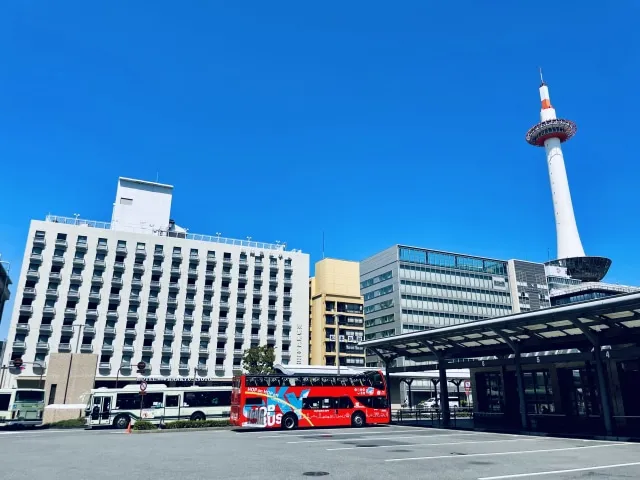
Arranging a taxi in Kyoto is said to be especially difficult compared to other tourist cities.
Many people have had their plans derailed by opening the app on the day of their trip only to see “unable to dispatch,” or finding a long line at the taxi stand.
This section explains the structural reasons why this happens in Kyoto, and offers concrete measures to eliminate that stress entirely.
Kyoto’s Booking System Overloads All at Once During Peak Season and Rainy Days
Taxis are especially hard to catch during the cherry blossom season (late March–early April), the autumn foliage season (November), Golden Week, and the school-trip season in October, when taxi users converge on popular spots like Kiyomizu-dera, Kinkaku-ji, and Arashiyama.
During these periods, citywide taxi demand spikes all at once, overwhelming apps, phone lines, and taxi stands simultaneously.
Major stations like Kyoto Station have taxi stands, but the number of vehicles is limited, and long lines form during peak tourist season.
Taxi companies’ reservation centers also become hard to reach, and even cruising empty taxis may not be easy to catch right away.
This isn’t just an issue with the taxi stand itself — it’s a structural constraint: at the Karasuma exit taxi stand at Kyoto Station, there are only 54 waiting spaces against roughly 4,900 registered corporate vehicles and about 1,530 individually owned ones, and because taxis could otherwise overflow onto Shiokoji-dori depending on the time of year and day, registered vehicles are divided into four groups by license plate number to control entry.
Another often-overlooked factor is the surge in demand on rainy days.
People who would normally walk, cycle, or wait for the bus in clear weather all shift to taxis at once, so even outside peak season, ride-hailing apps can struggle to keep up on rainy days.
The table below organizes the situations in which arranging a taxi in Kyoto becomes especially difficult.
| Difficult Situation | Main Reason | Areas Most Affected |
|---|---|---|
| Cherry blossom season (late March–early April) | Sharp increase in visitors from Japan and abroad; demand far exceeds supply | Maruyama Park, Arashiyama, around Kyoto Station |
| Autumn foliage season (November) | The busiest period of the year for visitors to Kyoto | Higashiyama area, Arashiyama, Kitayama area |
| Golden Week (late April–early May) | Concentrated tourist numbers combined with traffic congestion during the holiday | Citywide, Kyoto Station Karasuma exit |
| Gion Festival, Aoi Festival, and other events | Surge in demand for rides home/onward right after events end | Around Shijo-Kawaramachi, Karasuma-Oike |
| Rain / bad weather | Pedestrians and cyclists all switch to taxis at once | Tourist areas in general |
| Early morning / late night | Fewer vehicles operating; apps may be unable to dispatch | Suburban areas, around Arashiyama and Fushimi Inari |
Even advance bookings made through an app can sometimes fail to go through properly, which can end up taking even more time.
Given this, it’s important to shift your mindset away from “I’ll figure it out on the spot” during the trip-planning stage itself.
Early Planning Is Key: The Reassurance of Having Transportation You Can Book Up to Six Months Ahead
Many people book their accommodations and flights early but put off arranging transportation, thinking “I’ll figure it out once I’m there.”
However, during Kyoto’s peak season, it’s not an exaggeration to say that securing your transportation should be the top priority in trip planning.
Instant-dispatch apps like GO, DiDi, and MK Taxi are well-suited to “I want to ride right now” situations, but by their nature, they can struggle to guarantee a specific date and time days, weeks, or months in advance.
To lock in your transportation during the trip-planning stage, choose a service that lets you complete a booking in advance by specifying the date/time, pickup location, and destination.
The table below compares the characteristics of instant-dispatch apps versus advance-booking services.
| Comparison | Instant-Dispatch Apps (GO, DiDi, MK, etc.) | Advance-Booking Services (MK, NearMe, etc.) |
|---|---|---|
| Booking timing | Right before boarding (real-time) | Can be booked from the trip-planning stage |
| Reliability during peak season | Low (dispatch often fails when crowded) | High (arrangement is guaranteed once booked) |
| Fare transparency | Varies with distance and traffic | Fixed price known in advance |
| Flexible route changes | Can direct the driver as you go | Route must be set before boarding |
| Groups / large luggage | Van availability can be limited | Jumbo taxis etc. can be specified in advance |
| Best suited for | Short, urgent trips, same-day additional moves | Full sightseeing routes, airport transfers, group travel |
To put it concretely, the moment you decide “I’m planning a trip to Kyoto in November for the autumn foliage,” the ideal move is to book your transportation at the same time as your accommodation.
Using a ride-booking app strategically and planning ahead is considered important for sightseeing in Kyoto. Securing transportation early lets you focus on visiting spots on the day itself, without worrying about time.
Booking early also brings significant peace of mind, removing worries like “what if the app won’t connect” or “I don’t have time to wait in line at the taxi stand” well before you even leave for your trip.
Locking in your transportation early in the planning process is the best strategy for enjoying Kyoto sightseeing to the fullest.
Making Kyoto Travel More Affordable and Convenient with Advance Booking: How to Use “NearMe”
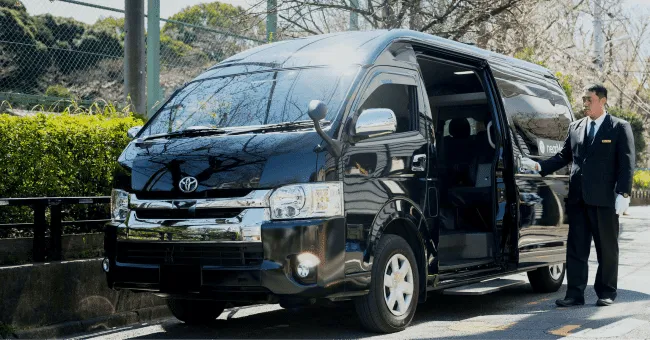
During peak season in Kyoto, you can end up sending ride requests through a taxi app only to keep getting “no match,” while charter taxis are fully booked and unavailable.
An advance-booking option that has been gaining attention in recent years as a fundamental solution to this problem is “NearMe.”
NearMe’s biggest strength is that it offers two plans depending on your needs — an affordable “shared ride” and a fully private “charter” — letting you secure your transportation online with confidence from the trip-planning stage onward.
Save Up to 50% on Airport Transfers and City Rides with “Shared Rides”!
NearMe’s signature “shared ride” service uses proprietary AI-powered route optimization to match passengers heading in the same direction, letting them share a single vehicle.
When a shared ride is successfully matched, it’s offered at up to 50% less than a regular taxi fare, letting you tour Kyoto’s major areas without worrying about the meter climbing due to traffic.
The area covered by the “Kyoto Sightseeing Shuttle” includes essential Kyoto sightseeing spots such as Kinkaku-ji, Kiyomizu-dera, the Kyoto Imperial Palace, and the Kyoto Botanical Gardens.
The process is simple: enter your number of passengers, pickup location, and destination on the service website or app to book. You’ll receive a confirmation notice before departure based on the shared-ride matching status, and on the day, you can board smoothly with fully cashless payment.
| Comparison | Regular Taxi (Instant Dispatch) | NearMe (Shared Ride Plan) |
|---|---|---|
| Fare | Metered (varies by distance/time) | Fixed price, up to 50% off when shared |
| Booking method | Instant same-day dispatch via app | Advance booking (can be secured together with your flight or hotel) |
| Arrangement during busy times | Matching can be difficult during peak season/rain | Booking early guarantees your spot |
| Riding style | Chartered by a single group | Shared with other groups heading the same direction |
| Payment method | In-app payment or cash | Online payment (fully cashless) |
The earlier you book, the more you save, with discount amounts changing in stages at 30, 14, and 7 days before your ride. Once your travel dates are set, booking NearMe at the same time as your flight and hotel is the best way to get the most value.
For Family Trips or Group Sightseeing, the Fully Private “Charter Plan” (No Sharing) Is Ideal
For families with children, or groups of relatives or friends who want to enjoy Kyoto sightseeing in their own private space without sharing with other passengers, the jumbo taxi “fully private charter” plan — with zero sharing with other customers — is recommended.
You can charter an entire large vehicle, such as a HiAce or Alphard-class van seating up to 9 people, so there’s no travel stress even when traveling with suitcases and strollers for the whole group.
You can also leave shopping bags in the car and tour attractions hands-free. Service runs from 9 a.m. to 6 p.m., and the entire group’s transportation cost can be paid online in one lump sum, eliminating the hassle of splitting the bill or settling up on the spot.
| Group Size | Recommended Vehicle | Luggage Guide | Riding Style |
|---|---|---|---|
| 1–4 people (light travel) | Sedan / minivan | About 2–3 carry-on suitcases | Choose shared or charter depending on the occasion |
| 5–9 people (family/group) | Jumbo taxi (HiAce, etc.) | Multiple large suitcases + stroller | No sharing with other groups (fully private charter) |
What Successful Inbound Cases Near Disney Teach Us About the Reassurance of “24-Hour, Up-to-Six-Months-Ahead Booking”
Around Tokyo Disney Resort®, more and more tired-out families and inbound visitors, both from Japan and abroad, are using NearMe to completely skip the long lines at taxi stands.
This “no-waiting, time-efficient travel” trend, born in an area facing the same kind of taxi shortage from global overtourism, is gradually spreading to the Kyoto area as well.
With typical ride-booking app reservation features (such as AI booking), you often can’t apply until just a few days ahead, and the vehicle may remain unconfirmed until the last minute, leaving you anxious. NearMe, however, can be booked anytime, 24 hours a day, via the web or app, and supports long-range bookings up to six months (180 days) in advance.
What’s more, using NearMe earns you JAL or ANA miles, so locking in your transportation at the same time you book your flight and hotel is the smart traveler’s rule of thumb for enjoying your entire trip more affordably.
The table below summarizes how to use NearMe.
| Step | Action | Point |
|---|---|---|
| ① Sign up | Register for free on the official NearMe website or app | Simple registration with just an email address |
| ② Enter details | Enter pickup location, destination, number of passengers, and desired date/time | Alternative plans eligible for the shared-ride discount are also suggested |
| ③ Provisional booking | Wait for a match to be confirmed | You’ll receive a confirmation notice before departure |
| ④ Pay online | Confirm your payment amount in advance by credit card, etc. | No cash needed on the day — fully cashless |
| ⑤ Board | Meet your driver at the designated pickup point; payment is completed once you board | Arrive with time to spare to avoid being late |
The roles are clear: instant-dispatch apps excel when you want to ride “right now,” while NearMe excels for travelers who want to plan ahead and secure their transportation reliably, affordably, and comfortably.
To make your Kyoto travel truly satisfying, wisely using both of these options depending on your needs and circumstances is the optimal approach as of 2026.
Conclusion: In Kyoto, the Right Answer Is to Use Both “Instant Apps” and “Reservation-Based NearMe”
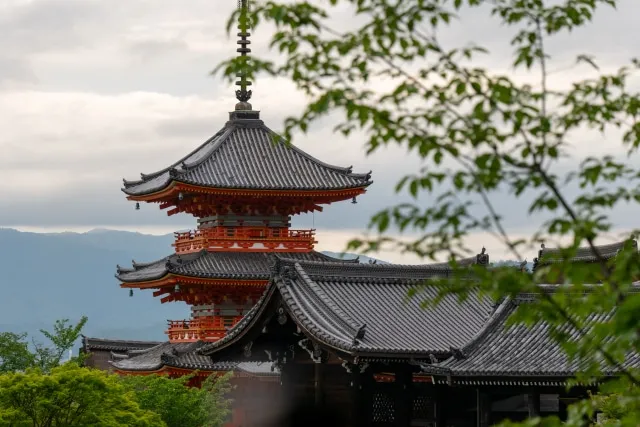
For getting around Kyoto, the optimal approach is to use ride-hailing apps like GO and DiDi for last-minute trips, while relying on the advance-booking service NearMe for peak tourist season, touring multiple spots, or moving large groups with heavy luggage.
Precisely during the busy seasons when apps get overloaded and won’t connect, planning ahead and using a reservation-based service is the biggest key to making your Kyoto sightseeing more comfortable.
On the NearMe official website, you can enter your pickup location, date and time, number of passengers, and amount of luggage to see detailed pricing, timing, and route information — so if you’re considering using the service, be sure to check it out.
Related Articles
![[2026 Latest] Itami Airport (Osaka International Airport) Parking Comparison Guide: Rates, Shuttle Service, and Reservations Explained](/_astro/image5.DdZVEZG-_4dLWH.webp) Itami Airport
Itami Airport[2026 Latest] Itami Airport (Osaka International Airport) Parking Comparison Guide: Rates, Shuttle Service, and Reservations Explained
When planning how to get to Itami Airport (Osaka International Airport), many people aren't sure whether to use the official parking lot, a private parking lot with shuttle service, a shared home parking space, or a door-to-door transport service.
 Itami Airport
How to Get from Itami Airport (Osaka International Airport) to Kyoto Station: A Guide to Public Transportation Options
Many travelers aren't sure how to get from Itami Airport (Osaka International Airport) to Kyoto Station. There are several public transportation options, but the best choice is one that lets you check your luggage and travel in a comfortable seat. This article walks you through the public transportation options for getting from Itami Airport to Kyoto Station.
 Itami Airport
Ways to Get to Itami Airport (Osaka International Airport): Comparing Public Transportation Options
Many people wonder about the best way to get to Itami Airport (Osaka International Airport). There are several public transportation options available, so rather than comparing fares alone, please choose based on the pros and cons of each. This article introduces ways to get to Itami Airport using public transportation.